

What Bloomingdale's Five Quarters of Growth Got Right while Saks Went Bankrupt
The market between mass retail and high-luxury may be the sweet spot that North American customers are willing to pay for in a surprising turn of events.


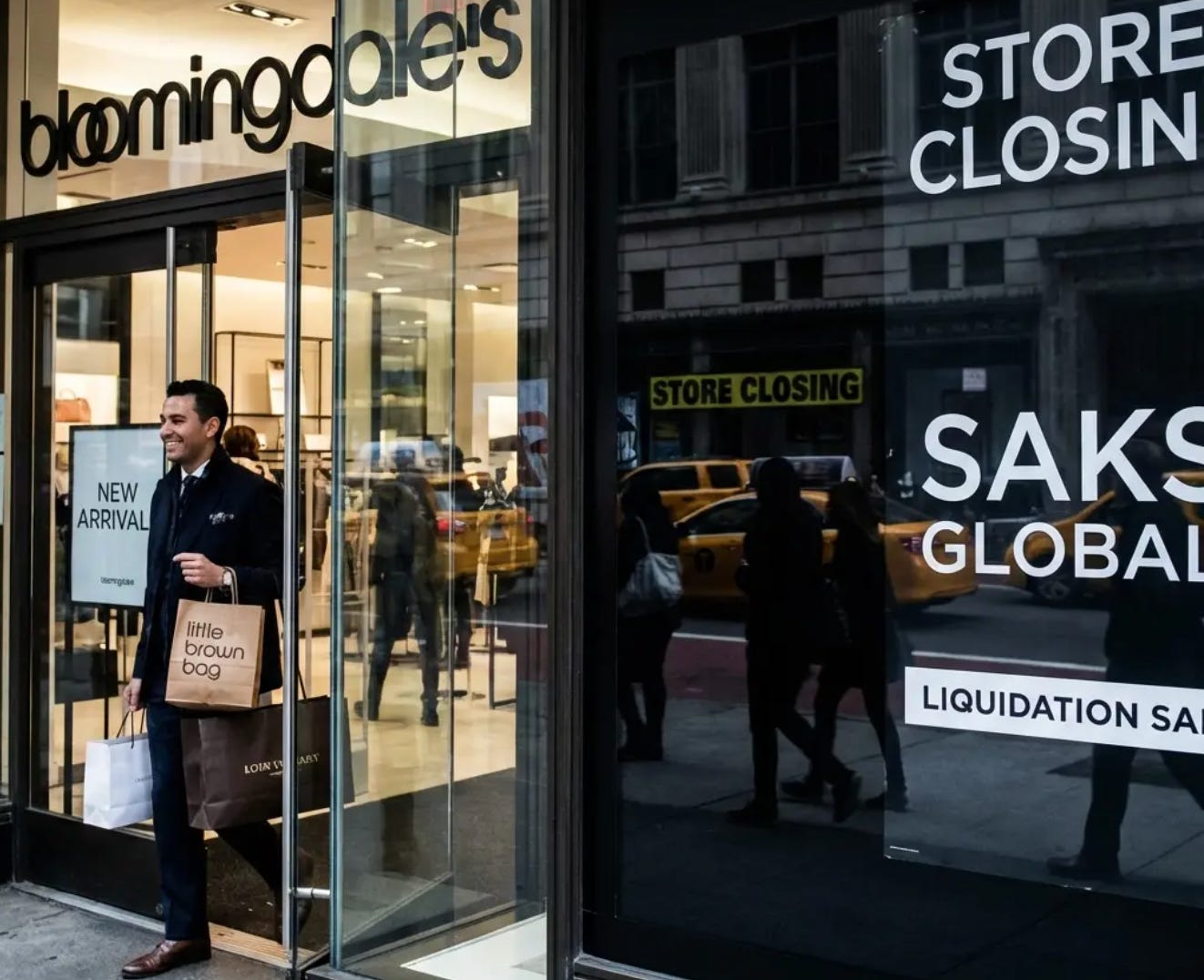
While 15,000 brick-and-mortar stores closed in 2025 (more than double the previous year), Bloomingdale’s just posted the highest sales in its history.
The contrast is stark.
Saks Global filed for bankruptcy in January 2026 with up to $10 billion in liabilities. Macy’s shuttered 66 stores. Kohl’s closed 27 locations. JCPenney cut seven more.
Bloomingdale’s? Five consecutive quarters of growth. Q3 2025 comparable sales jumped 9%, the strongest gain in 13 quarters.
The department store model isn’t dead. But the execution playbook has fundamentally changed.
The Breaking Point: When Luxury Became a Liability
Saks Global’s collapse reveals what happens when retailers misread the market.
The company accumulated $4.7 billion in debt by Q2 2025. By December, nearly 48% of bills were overdue, up from just 16% in July.
Vendors stopped shipping inventory. Stores ran thin on stock.
The diagnosis from a Morningstar analyst was blunt: “Rich people are still buying, just not so much at Saks.”
Those customers went somewhere. Many landed at Bloomingdale’s.
The high-end luxury segment contracted between 2023-2025 with a CAGR of -1% to -3%. Meanwhile, the accessible luxury market remained relatively flat, projected to reach $5.26 billion by 2034.
The gap between high-luxury and mass market became Bloomingdale’s strategic territory.
